


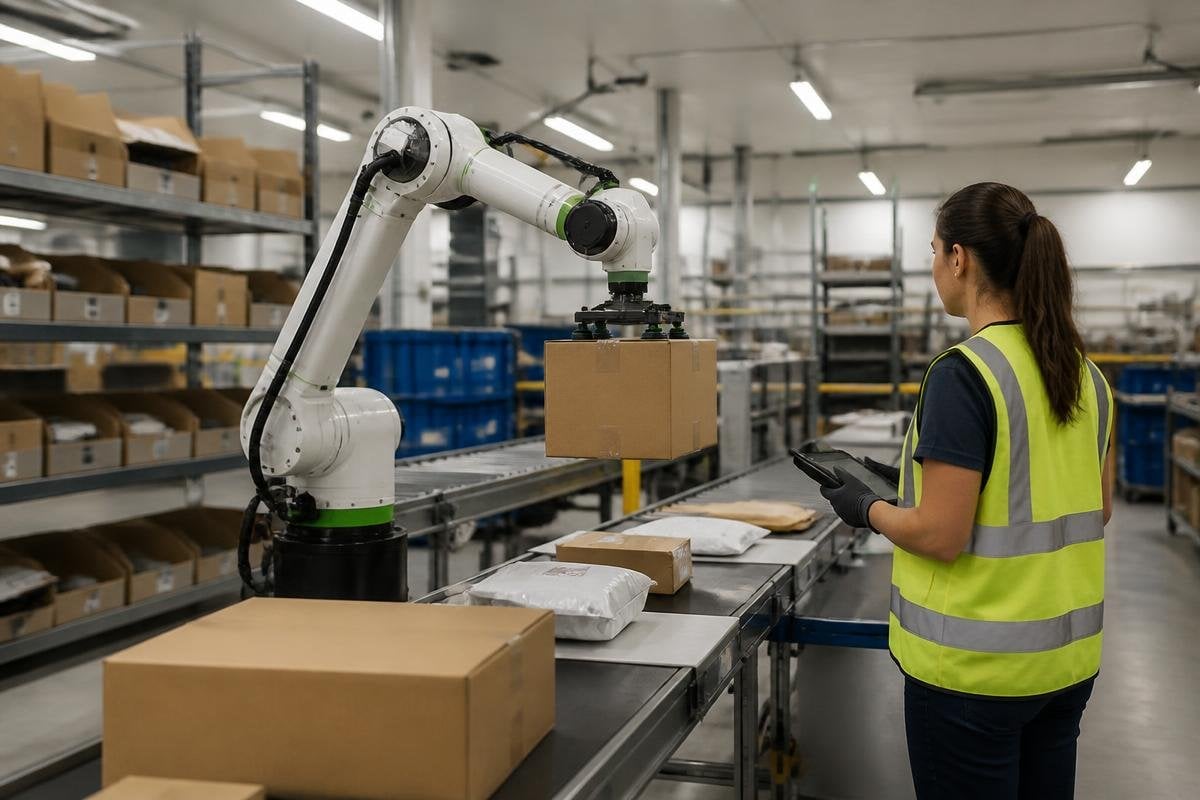
A robot can sort parcels, move shelves, inspect pipes, or help assemble a product. The harder test is showing that the system works for a full shift, beside people, at a cost the operator can defend.
- Task fit matters more than a robot’s shape
- Cycle time and uptime reveal practical value
- Safety, service, and training belong in the price
Where the work starts
The strongest robotics companies begin with a repeated task. A robot may carry parts between workstations, pick items from bins, or scan a space for damage. Each job has a clear output that a manager can count.
That count might be items moved per hour, inspection points checked per shift, or minutes spent handling one part. Without a measure like this, a company can show a smooth demonstration while leaving the buyer unsure what the robot changes on Monday morning.
The task also sets the hardware needs. A mobile robot needs a route, sensors, and a way to stop safely. An arm-based system needs reach, payload, and a gripper that can hold the actual part. Software must connect the system to the tools and records already used at the site.
What proof looks like
A company building work robots should show more than a working arm or a short video. The useful evidence sits close to the job: the task, the setting, the number of attempts, and the cases that caused a stop.
Ask for cycle time in seconds, uptime as a percentage, payload in kilograms, and the number of people needed to run the system. Ask how the robot behaves when an item is out of place, a route is blocked, or a sensor gets dirty.
Those details matter because work sites are variable.
A robot that picks one known object from one fixed spot may need a different gripper, camera, or software setting when the box changes size. The cost of that change belongs in the buying decision.
The maker matters because the purchase price sits beside software, service, spare parts, and the tasks the robot can handle after installation. Reports at Robot24 put those company claims next to machines and workplace evidence, which brings us to the firms building them.
The companies behind the machines
Robotics companies rarely build every part themselves. One team may make the arm, another may supply cameras, and a software company may connect the system to a warehouse or factory control system. The buyer needs to know who owns each part when something stops working.
Service plans matter as much as the robot’s first price. A site may need spare grippers, battery replacements, software support, and staff training. A low purchase price can lose its appeal if the buyer needs a specialist for every change.
Safety also needs a clear process. The company should explain how people share space with the robot, where emergency stops sit, and what happens after a fault. A safe system is one with known limits and a written response when those limits are reached.
The open question is the work the robot cannot do. A company may show steady movement in a controlled setting, while the buyer needs handling across several shifts and changing stock. That gap stays open until the system runs on the buyer’s own task.
A buyer’s checklist
Use these questions before a pilot or purchase:
- Name the task: Write down the exact action the robot must repeat.
- Set the measure: Choose cycle time, output, uptime, or inspection accuracy.
- Test the exceptions: Include blocked routes, changed parts, poor lighting, and sensor dirt.
- Price the whole setup: Add integration, training, service, spare parts, and power.
- Assign ownership: Record who fixes the robot, software, gripper, and site connection.
- Set a stop rule: Decide the result that ends the pilot or sends the system back for changes.
A company that answers these points with site data gives you something you can check. A company that stays at the level of vision leaves the main work to the buyer.
I’d choose the robotics company that shows its failure cases and operating costs, even when another company has the smoother demo.
The next useful proof will come from longer deployments: named tasks, measured output, repair records, and costs recorded over full shifts. Until those figures are available, the workplace remains the test that decides which robots belong there.
